
Literacy & Numeracy Support
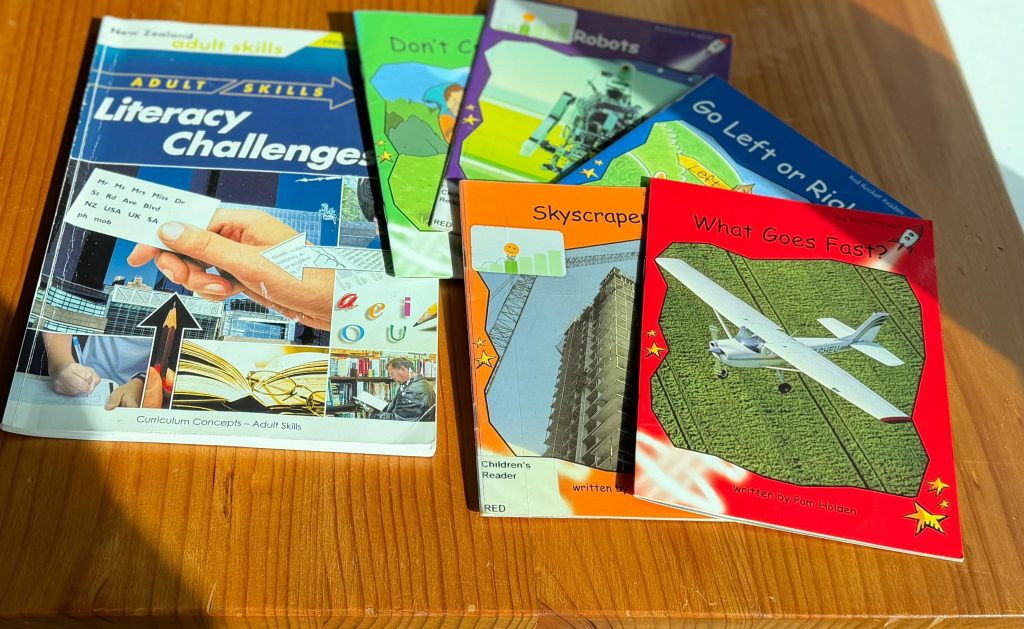
Help learners strengthen reading, writing, and numeracy skills. Support is practical, encouraging and shaped around the needs of the individual.

Volunteer Programmes
Our volunteers work with people in prison, sharing practical skills, such as reading, writing and job-readiness. No teaching experience required - just be supportive, empathetic and encouraging.

What we do
Our volunteer programmes create opportunities for people in prison to learn, build confidence and develop useful skills for life beyond prison.
Volunteers bring their own experience and knowledge. They help people improve their reading, writing and numeracy skills. They also share practical skills such as sewing and quilting and beekeeping.
Programmes vary between facilities, depending on local needs, and what can be delivered within each prison.
Programme areas
Help learners strengthen reading, writing, and numeracy skills. Support is practical, encouraging and shaped around the needs of the individual.

Provide additional support for learners completing correspondence study or further learning. Assist with building study habits, act as a sounding board for ideas, and support with comprehension of coursework.

Support learners building their English language skills, from everyday conversation to reading and writing. Sessions focus on the practical language people need for daily life, study and work, at whatever level a learner is starting from.

Help people prepare for work by building confidence, identifying their skills and exploring practical tools such as CVs and cover letters. Your own experiences of working life could open doors to pathways for learners.

Share a creative skill - sewing, art, music, dance, crafts. Offer learners a space to express themselves, have fun, and pick up something they can keep doing after release.

Help people prepare for life outside the justice system with practical, everyday skills, from budgeting and critical thinking to hands-on skills like cooking, beekeeping or barista training. These programmes build confidence and give learners something practical to carry forward.
Locations
This map provides geographical context only. It does not show current programme or volunteering availability at individual facilities.
Get involved
You don't need to arrive with teaching experience or know exactly where you might fit. Tell us a little about yourself, where you are based and what you could bring to the programme.
We'll use your registration to understand your interests and whether there may be a suitable way for you to get involved.
Volunteer FAQ
The New Zealand Howard League for Penal Reform is a charitable organisation that has existed since the 1920s and is one of a number of organisations throughout the world named after the English prison reformer John Howard. We aim to make our communities safer by reducing both the number of people in prisons, and the rate of reoffending. We want to ensure that our prison system genuinely helps people to rehabilitate and create a viable life without crime. We believe this is not just the job of the professionals, but that communities have an essential role in making this happen.
Our volunteers provide a range of educational and vocational programmes, including literacy and numeracy, ESOL, critical thinking skills, creative arts, and other work and ‘life’ skills. We’re always looking for new ways to involve volunteers in helping justice-involved people learn new skills and create a better life from themselves, so if you have skills or knowledge to share that we haven’t mentioned here, please get in touch.
The most important skills are an ability to communicate, a genuine interest in people and an ability to develop an effective working relationship with those you are helping. Yes, we’re delighted to have many volunteers with experience in areas such as education, group facilitation and teaching work and life skills. But we need people who are naturally supportive, empathetic and encouraging, to help our learners stay motivated and feel connected even when the going gets tough.
We know that working in this space can be intimidating, especially at first! Ara Poutama Corrections takes the safety of volunteers very seriously, and there are many controls in place to ensure your safety and wellbeing while you are on site working with learners. This includes extensive security infrastructure (such as CCTV, radios, and custodial staff monitoring), as well as carefully designed protocols and rules to ensure everyone knows what to do. You will be well looked after during your time on site with Ara Poutama Corrections, and you will never be thrown in the deep end or required to make decisions on your own.
Due to the nature of our work, we are only able to accept volunteers over the age of 21. For everyone’s safety, Ara Poutama Corrections requires volunteers in prison sites to be fit and able in case of an emergency. This means that if you are deaf or hard of hearing, blind or partially sighted, or use a mobility aid such as a wheelchair, cane or walker, you may not be eligible for security access into a prison site. Additionally, depending on the site and location you are volunteering, there may be some restrictions as a result of the Ara Poutama Corrections MOJ screening process. The NZ Howard League do not access information or make decisions about security clearances for Ara Poutama Corrections, but we are always happy to talk through any potential challenges regarding accessibility for volunteers. If you are interested in volunteering with us but feel that any of these aspects of hands-on volunteering may pose a challenge for you, please still get in touch with us – we would love to speak with you about what might be possible, or what other ways you might be involved.
Most of our volunteers spend around 1 ½ hours per week, plus travel time, volunteering with us. Some sites are close by, but many are outside of main population areas and require a bit of driving. There’s plenty of scope to take breaks in your volunteering for holidays or time spent with whānau, and to work around your other personal and work commitments; but it is wonderful if you can commit to being available on a regular basis, say, one morning or afternoon per week.
Each site has its own daily schedule. However, volunteers can only access site during weekdays – due to staffing restrictions and timing of other activities, we aren’t able to deliver programmes on weekends or in evenings at this stage.
Not at the moment. All of our programmes are face-to-face, and done using paper and pen – no laptops or projector screens yet! We are hopeful that in time, access to digitally enabled tools will expand and learners will be able to engage with volunteers through video no matter where they are in the country.
Each volunteer programme has its own resource requirements, and these are generally provided by the NZ Howard League or by the Education team at site. These resources might be books or workbooks, worksheets, materials for crafting, or many other items. Sometimes our volunteers like to hunt for additional resources (such as magazine articles or books on subjects that are of interest to their learner), but this is not required – we can provide everything you need.
Ara Poutama Corrections provide training related to security procedures and how to stay safe when you are on site. The NZ Howard League provides a range of training on how our programmes work, plus periodic specialised training on issues such as boundaries management, trauma-informed practice, and working with neurodivergent learners. We also have experienced volunteers who are available to shadow when you first start volunteering with us, and on call to assist with answering questions or troubleshooting. We are always open to new ideas for training and professional development for our volunteers.
Yes – petrol vouchers are provided to volunteers directly by Ara Poutama Corrections. Please note that support for travel costs is limited. After 6 sessions of volunteering per year, you are entitled to one $300 petrol voucher.
A past criminal record or a close personal link with someone currently (or recently) in prison is not an automatic disqualification for volunteer work in prisons, but it needs to be looked at on a case-by-case basis. What’s important is that if you are in this situation, you disclose it on your application forms that are sent to the team at Ara Poutama Corrections, who will then decide what needs to happen next. We are happy to support you through this process, and to answer any questions you might have about how this works.
Help us create more opportunities
Your donation supports literacy, driver licensing and reintegration programmes across Aotearoa.