
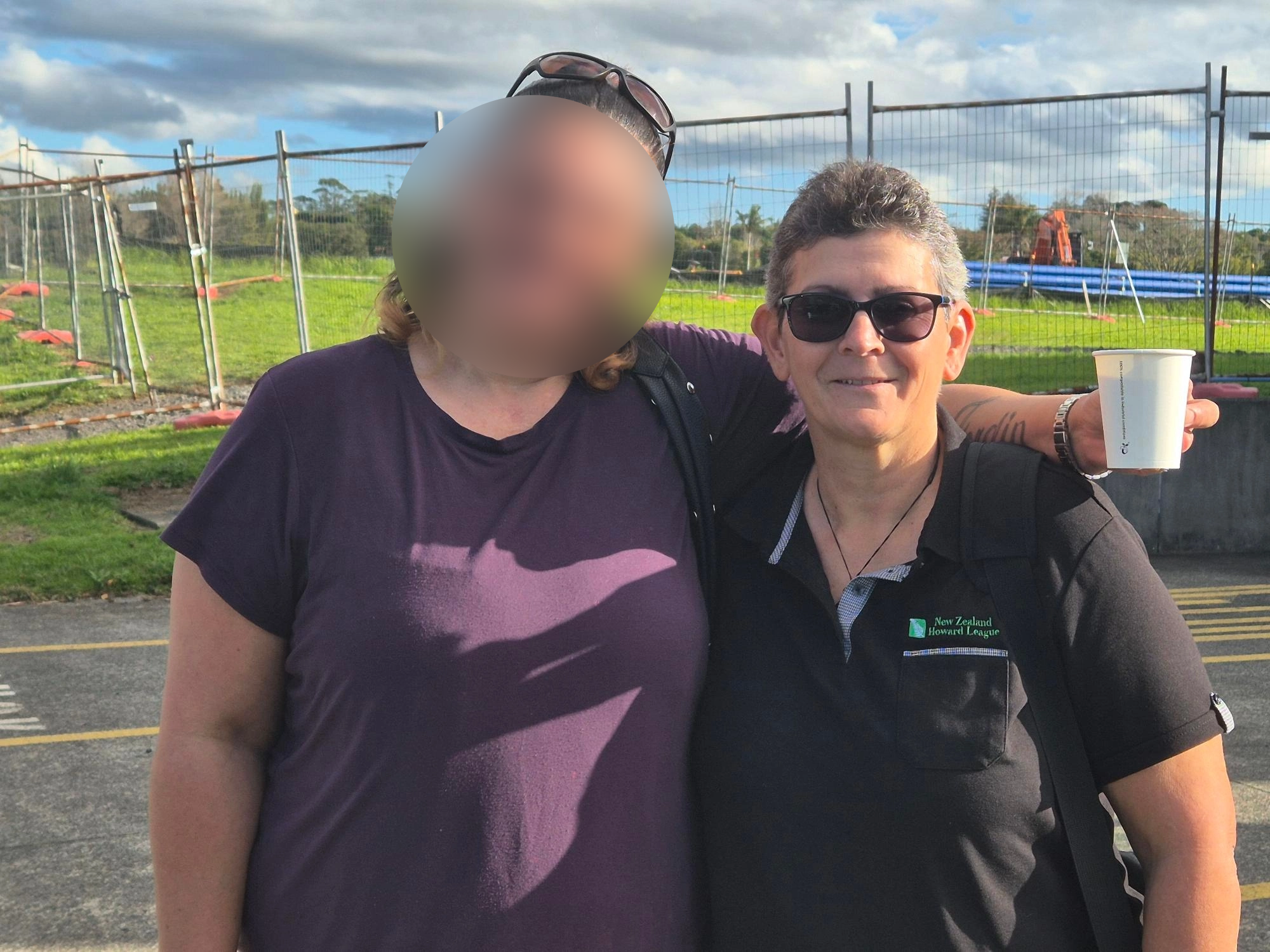
The New Zealand Howard League for Penal Reform’s successful Driving Programme helps turn around people’s lives.
For most New Zealanders, a driver licence is easy to take for granted. Yet for people referred by Corrections, Police, the courts and Oranga Tamariki to our Driving Programme, a driver licence is rarely a small thing.
That’s because in practical terms, a licence often determines whether someone lands a stable job or none, reconnects with whānau or stays isolated, moves forward or slides back into the system.
That is why a driver licence matters and what happens when people drive without one.
Our approach on the Driving Programme is simple: we do not put anyone forward for a test until they are genuinely ready to pass it.
New Zealand is built for drivers
New Zealand’s public transport network is patchy. Outside a handful of main urban areas, buses and trains are infrequent, have limited operating hours, or don’t exist in many rural and provincial communities.
As a result, being able to get anywhere in New Zealand is closely tied to one thing: whether a person can legally drive.
That means the practical consequences of not holding a licence go far beyond inconvenience.
“Not having a licence doesn’t just add one more problem to the pile. It undermines almost every other goal.”
People without a licence are frequently unable to reach essential services, travel the distances many jobs require, drive tamariki to school, or take up work and training opportunities that fall outside the limited hours and routes public transport covers.
More than 80 percent of all jobs in New Zealand require a driver licence, and in entry-level roles that figure climbs even higher.
For someone living rurally, or in a family with only one vehicle and one licensed driver, the knock-on effects impact the whole household, not just the individual.

These usually aren’t the only barriers for the people we work with. They stack on top of everything else that comes with reintegration. That includes finding somewhere to live, reconnecting with family, meeting the conditions of release, and looking for work with a record that some employers won’t look past.
It means that not having a licence undermines almost every other goal, because so many of those goals depend on being able to get somewhere.
The driving-offence pipeline into prison
The link between driving and offending in New Zealand is one of the clearest entry points into the justice system.
Around 65 per cent of Māori offenders have a driving offence as part of their initial sentence. A significant proportion of all prison sentences trace back to driving matters, including driving without a licence.
For many people, the very first contact with the courts is a driving charge, not because they are dangerous, but because they had no lawful way to get to work, to whānau, or to the shops.
Once that first conviction lands, the cycle tends to repeat.
A disqualification or an unpaid fine leads to another stop, another charge, another court date. Each one makes the eventual road back to a licence longer and more expensive, and each one add to a record that makes employers less willing to take a chance.
It costs the country roughly $2,000 a week to house someone in prison.
By comparison, a modest one-off cost can set that same person up with a licence. Independent analysis has found that every dollar invested in the New Zealand Howard League for Penal Reform’s Driving Programme returns $5.60 in value to New Zealand. Very few interventions offer that kind of return, in dollars or in changed lives.
What our Driving Programme does
Our Driving Programme exists to interrupt that cycle, and we’ve built it so that cost, paperwork and access are never the reason someone misses out.
Every participant referred to us is worked with at no cost to them. We cover the lot: original birth certificates and other ID, eye tests, driving lessons, and the practical test fee itself.
“Our job isn’t to teach someone to drive from nothing. It’s to get them properly, safely licensed for skills they already have.”
For lessons and for sitting the practical test, participants use one of our own vehicles, so a lack of access to a legal, warranted, insured car is never what stands between someone and their licence.
It’s also worth being clear about who we work with.
The people who come to us can already drive. Many have been driving for years. That’s usually why they’ve ended up in front of us: they’ve been getting themselves to work, to whānau, to appointments, without holding the licence that makes it legal.
Our job isn’t to teach someone to drive from nothing. It’s to get them properly, safely licensed for skills they already have, and to fill in the gaps such as road code knowledge, test-day confidence, and literacy support where needed, that have kept them from doing it sooner.
| YEAR | NUMBER OF DRIVING LICENCES |
| 2014 | 31 |
| 2015 | 119 |
| 2016 | 224 |
| 2017 | 558 |
| 2018 | 1020 |
| 2019 | 2591 |
| 2020 | 3149 |
| 2021 | 3915 |
| 2022 | 4231 |
| 2023 | 5883 |
| 2024 | 6549 |
| 2025 | 7162 |
| 2026 | 2457 |
| 37,884 |
For those who need to sit a practical test, we provide three lessons with a qualified instructor to prepare them, focused on the specific things a test assesses, rather than general driving experience they already hold.
We don’t turn away anyone who is eligible for the programme. Where we do draw a firm line is on behaviour. Disrespect toward our instructors, staff, or fellow participants isn’t tolerated. The programme only works if it’s a safe, respectful environment for everyone in it. Within that, our door stays open.
We don’t rush anyone to sit a driving test
Given how much rides on earning a license, there can be pressure from participants, families, or referral agencies wanting to push people through as fast as possible. We resist that, deliberately.
Putting someone forward for a test before they’re genuinely ready doesn’t just risk a fail.
For many participants, a driving test is one more official gate that life is asking them to pass through, often after a lifetime of gates that felt stacked against them: school, court, parole hearings, job interviews.
A failed test can reinforce a belief that’s already sitting close to the surface for a lot of the people we work with: that they’re not the kind of person who succeeds at official, structured things. That belief is corrosive, and it works directly against what we’re trying to build.
There’s a practical cost too. A failed test isn’t always free to resit, and money and time are two things our participants are often short of. So instead of a fixed timeline, we build our approach around genuine readiness:
- We prepare people properly before we book them in. The three lessons ahead of a practical test target exactly what the test requires, building on driving experience participants already have.
- We support the whole person, not just the driving. Literacy support, help with paperwork, and straightforward encouragement all go into getting someone test-ready, because a test is about more than handling a car.
- We treat a setback as information, not failure. If someone isn’t ready, that tells us what still needs work, not that the programme or the person has fallen short.
- We let people move at their own pace within a supportive structure. Some are ready within weeks. Others need longer, although both are legitimate outcomes, and we treat neither as a problem.
The results speak for themselves.
That’s because since 2014, the Howard League has helped more than 38,000 people gain a driver licence through this approach. They are participants who, in many cases, had spent years driving unlicensed with no lawful pathway forward until someone sat down with them and worked through it properly.
The Driving Programme is a pathway, not a transaction
It’s worth spelling out what a typical journey through the programme looks like.
A participant is referred to us often a probation officer, sometimes directly through a court process. Occasionally through Oranga Tamariki for a younger person still finding their feet.
We start by working out exactly where they sit: whether they hold a current learner licence, whether it’s lapsed, whether they need to resit the theory test, or whether they’re further along and simply need the practical test.
From there we sort out whatever paperwork is missing. It could be a birth certificate. or proof of address. All of it is covered by us, none of it something the participant has to find money for.
Only once that groundwork is done does preparation for the test itself begin.
For participants who need to sit a practical test, that means three lessons in one of our vehicles with a qualified instructor, working through exactly what the assessor will be looking for.
Because these are people who already know how to drive, those three lessons aren’t about starting from scratch. They’re about sharpening the specific things a test measures, building familiarity with the car they’ll sit the test in, and settling the nerves that come with sitting any kind of formal assessment after a long time away from one.
If someone isn’t quite there after those lessons, we don’t send them in regardless. We work out what’s missing and keep going until they are.
What success looks like
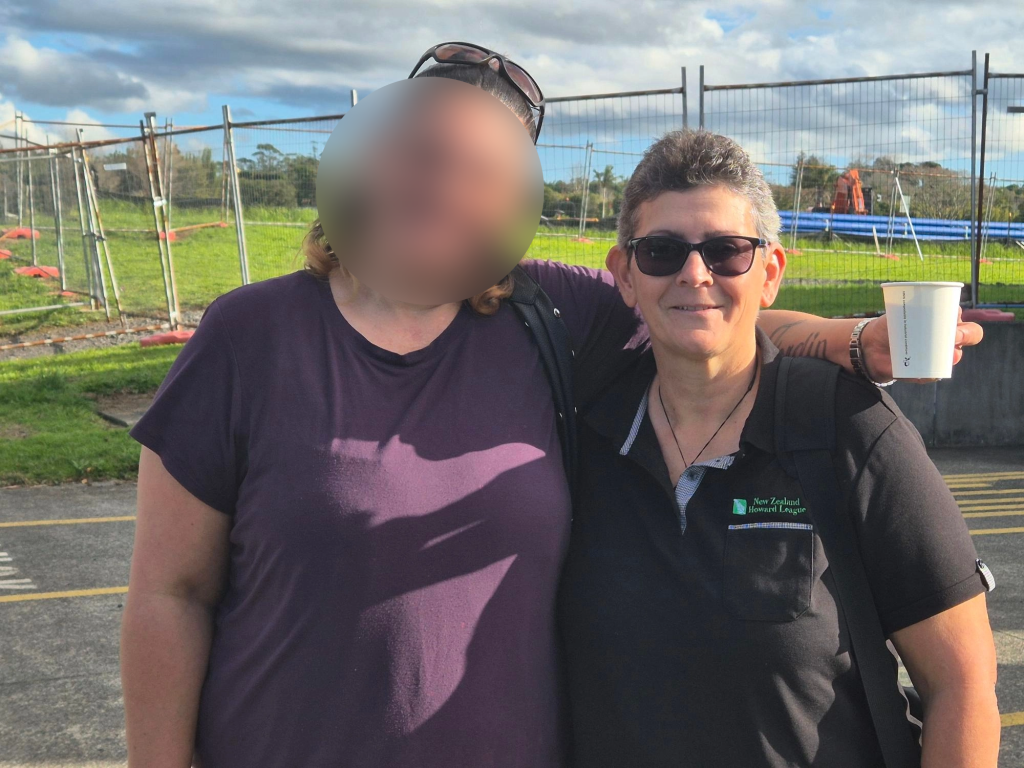
When someone in our programme gets their licence, it’s rarely just about the piece of plastic.
It’s the first job interview they can now get to on time, legally. Picking their kids up from school themselves. Or driving a parent to a hospital appointment without asking a favour of someone else.
“Someone who has properly prepared and earned their licence rather than pushed through before they were ready, is a safer, more confident road user for the rest of their life.”
It’s no longer weighing up the risk of driving unlicensed just to get to a job that could change their life, and it’s one less reason to end up back in front of a judge.
It is also, quietly, a public safety win. Someone who properly prepares and genuinely earns their licence becomes a safer driver. That’s different from being pushed through before they’re ready. Also, the confidence built along the way lasts for the rest of their life.
There’s a dignity in it too, one that’s easy to underestimate from the outside.
For many participants, a licence is the first official document in years that says “capable” rather than “convicted”.
It’s proof they met a standard and were trusted with something. Instructors who work alongside our participants often describe a real shift in confidence. A change in how someone talks about their own future, once they’re carrying a licence instead of avoiding checkpoints.
That shift matters well beyond the road. It’s part of how someone starts to feel like a valued part of their community again, not someone the system has written off.
The Driving Programme’s ripple effect through whānau
The benefits rarely stop with the individual. Take a household where one person becomes a legally licensed driver: the whole family’s world opens up. Children get to more of their sports and school events.
Likewise, whānau can get to medical appointments that they would otherwise miss. Also, groceries can be bought at a cheaper supermarket instead of a costly dairy within walking distance. And elderly parents can be visited more often.
But none of that shows up in reoffending statistics as it’s exactly the kind of stability that keeps people connected to what matters most. That’s because one of the strongest protective factors against reoffending is staying connected to whānau and community.
This is why we don’t see the Driving Programme as simply a transport initiative. Instead, it’s a reintegration initiative that uses a driver’s seat as the starting point. The licence is the visible outcome. Underneath that, reduced reoffending, meaningful employment, and a genuine sense of belonging in the community are the real goals.
Getting someone licensed isn’t the finish line. It’s the on-ramp to everything that comes next.
To learn more about our Driving Programme, refer a participant, or support our work, please get in touch.